This post is inspired by a question I got on my Ask Tsana page. Katrina asked:
The answer depends a bit on to what extent you want to destroy your planet. Geocide pretty much defines "destroy the Earth" as "annihilate in the particle physics sense, or dismantle/tear apart on either a macroscopic (large) or microscopic scale". He doesn't count Earth as destroyed if there's still a planet-like object there. However, for many narrative purposes, rendering the Earth entirely uninhabitable will do the trick.
So, leaving the dismantling and annihilation to Geocide (the website is amusing, although be warned that some of the details of physics are slightly off, but close enough), what are some ways of rendering Earth unfit for life?
Destroy all humans
So maybe what you want is not so much to destroy the planet as to destroy all the people on it. That's not really that hard. Or, at least, destroying most of the people isn't that hard. Some methods, which generally don't require elaboration:
Destroy all life
Why aim low? Bugger humanity and everything else with one of these sterilising scenarios:
A few words on supernovae and novae
Supernovae are how stars bigger than about 8 solar masses end their lives. Novae are not small supernovae. I know, that's what I originally learnt as a child/teenager by osmosis from SF novels. I think the connection between the words nova and supernova are primarily historic; a star suddenly appeared or became much brighter and acquired the label (nova meaning new), but the different causes weren't understood until much more recently.
Stars smaller than around 8 solar masses don't explode. They expand relatively slowly (well, y'know, compared with a supernova explosion) when they run out of hydrogen to fuse in their cores, then contract then expand again when they run out of helium. At this point, a large star going through the stages much more rapidly would collapse again under its own gravity and then kaboom supernova. Smaller stars aren't massive enough to collapse again under their own gravity. Instead, after the helium is used up, leaving either carbon or oxygen (or a combination) in the star's core, what was once the stellar atmosphere will keep expanding indefinitely. Initially, it forms a planetary nebula (not actually anything to do with planets), but eventually it will all dissipate and be undetectable. What's left behind is a white dwarf; basically a small, hot star which was once the core of the red giant star.
Suppose there were two stars near each other, and one went through the red giant to white dwarf steps before the other. When the companion star undergoes its red giant phase, maybe it expands enough that some of it's outer atmosphere is close enough to the white dwarf to accrete onto it. The reason these stars didn't supernova is because they were too small. There is a very definite upper limit to how massive a white dwarf can be before it collapses in on itself and explodes. That limit is 1.4 solar masses (but remember, most of the original star's mass is lost when it's doing the expanding thing, which is why the original star can be up to 8 solar masses). If the companion star accretes too much matter onto the white dwarf, the white dwarf will go over the 1.4 solar mass limit and explode. This is a Type Ia supernova. For the record, the alternative explanation for Type Ia supernovae, which is presently gaining more traction, is two white dwarfs colliding.
Since white dwarfs are small (1.4 solar masses in a volume roughly the size of Earth), they're not very visible, especially once they start to cool down. See how we might not see that kind of supernova coming? It could potentially not be that difficult to artificially orchestrate, either, if you have enough spare matter to throw at a conveniently placed white dwarf. Well, y'know, sort of easier than some large-scale astro-engineering projects could be.
Back to the point
If you recall the original question, Katrina asked:
The other issue is metallicity. Planets like Earth have rocky cores, which means they have high metallicity. Remember, metallicity in an astronomical sense refers to the abundance of elements heavier than helium, not necessarily just the things chemists/sane people identify as metals. Very massive stars generally form in metal-poor environments and are metal-poor themselves. This makes the presence of heavier elements as requires for rocky planet building less likely. Not necessarily impossible, but much less likely.
So yes, you can potentially have planets around the sort of stars that go supernova and, while native life probably won't get very complex if it arises at all, said planets could be inhabited by plucky humans.
I'm trying to come up with a simple (haha) and plausible way to destroy a planet to kick things off for a story but am having trouble getting the science right.Excellent question!
One of the first sites I visited to figure this out was this Geocide site: http://qntm.org/geocide
Under the Geocide in fiction page (http://qntm.org/fictional), the author says, "The Sun Crusher is a relatively small ship which carries a small number of missiles, each of which is tough enough to shoot into the centre of a star and cause it to go nova, which would certainly annihilate any nearby Earthlike planet."
My question is, don't stars that get massive enough to go nova have brief lives and thus not live long enough for a habitable planet to develop? I'm just basing that on Wikipedia (http://en.wikipedia.org/wiki/Planetary_habitability#Massive_stars), though, so I was wondering if you could tell me more. Can the habitable zones of massive stars ever actually be inhabited (and then later die in a supernova)?
The answer depends a bit on to what extent you want to destroy your planet. Geocide pretty much defines "destroy the Earth" as "annihilate in the particle physics sense, or dismantle/tear apart on either a macroscopic (large) or microscopic scale". He doesn't count Earth as destroyed if there's still a planet-like object there. However, for many narrative purposes, rendering the Earth entirely uninhabitable will do the trick.
So, leaving the dismantling and annihilation to Geocide (the website is amusing, although be warned that some of the details of physics are slightly off, but close enough), what are some ways of rendering Earth unfit for life?
Destroy all humans
So maybe what you want is not so much to destroy the planet as to destroy all the people on it. That's not really that hard. Or, at least, destroying most of the people isn't that hard. Some methods, which generally don't require elaboration:
- Widespread nuclear holocaust
- Some sort of plague
- Climate change. No, really, melt the icecaps and raise the temperature enough so that it is too hot and humid to survive without air-conditioning and eventually you'll run out of people. Or throw in some crazy weather disasters too. The Rhesus Factor by Sonny Whitelaw touches on this a bit (see my review here), also on the plague scenario.
- Very large volcano eruption. This is one of the things thought to have caused at least one of the prehistoric dinosaur(ish)-era extinctions. A less epically large volcano (actually, a few of them probably contributed) in 1816 caused the Northern Hemisphere (or Europe and America at least, not sure that Asia was affected as strongly, but google it if you're interested) to not thaw out in the summer. This was "the year without a summer". (And now I have that Rasputina song stuck in my head. Click the link and you will too.)
- Asteroid -- this one's a toss up between destroying all (most) humans and destroying all life. Ultimately, I suppose it's a matter of scale. Let's say this asteroid kills human life but not necessarily all the microbes. It would be somewhat similar to the volcano in the throwing dust and rubbish into the atmosphere, blocking out light and generalised doom.
- Magnetic field of the Earth turning off in the process of flipping. This is something that happens spontaneously every so often. It's bad because a whole bunch of ionising radiation (miscellaneous charged particles) from space is kept at bay thanks to our nifty magnetic field. Taking it away would give us a lot more cancer and sterility and could wipe out a large chunk of humanity. Microbes and probably a lot of (some?) sea life would be OK. Good luck artificially killing the magnetic field, though.
Destroy all life
Why aim low? Bugger humanity and everything else with one of these sterilising scenarios:
- Self-replicating nanobots (von Neumann machines) which consume all the [insert important chemical here -- carbon is popular]. This is also know as the grey goo scenario. Depending on the nanobots, this is likely to render the Earth inhospitable to life while they're still doing their thing.
- Large asteroid/comet or small moon colliding with Earth. Where a small impact would cause natural disasters (earthquakes, tsunamis) and potentially block out the sun with dust, a large impact could do many detrimental things. It could change the Earth's rotation, knock it into a slightly different orbit (or send it spiralling into the sun, but that would require a particularly large body), it could smash the Earth into chucks (which, thanks to gravity, would probably later re-collide to form Earth 2.0), render an appreciable fraction of the surface molten... Actually, I now have a brilliant mental picture of two or six asteroids hitting the Earth simultaneously from opposite sides and sort of turning it into molten goop... Not actually sure that would work with two, but six seems faintly plausible in a hand-waving way. Anyway, point is, hit Earth with something big enough and bye-bye life. Depending on conditions, it's possible life could spontaneously arise again, depending on how reliably life arises and how long it takes (before, for example, the sun goes red giant).
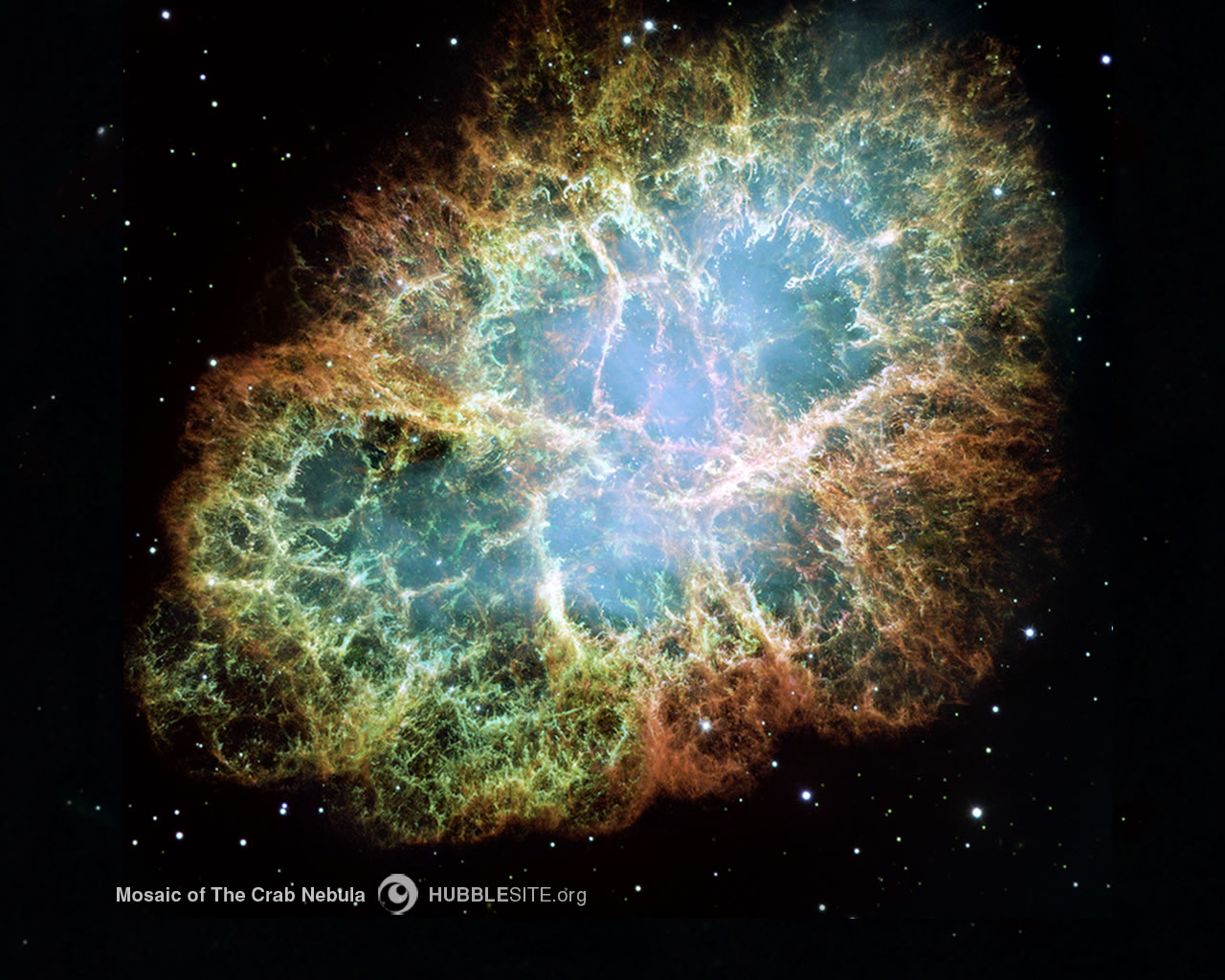
- Supernova/nearby gamma ray burst. The main problem with this notion is the lack of suitable supernovaing stars nearby, as Geocide mentions. However, you mentioned destroying a planet, not specifically Earth. A planet orbiting a star when it went supernova would be toast. Probably, it would be fairly inhospitable before the actual explosion, if Eta Carinae is anything to go by. A planet orbiting a non-explosive star near another star that went supernova could well end up sterilised, which is what I talked about in my post about the galactic habitable zone (and near in the astronomical sense isn't that close by). And, actually, if we're talking about Type Ia (which is to say not core-collapse supernovae; not the death throes of a large star) supernovae, which involve white dwarfs and (probably) ordinary stars going through their red giant stage, we might not even see the supernova coming. That's a slightly unsettling thought.
- Some sort of implausible doomsday device. Really, you can make up whatever rubbish you want for this one if you're so inclined. (But if you do, I don't promise not to tear your science apart if I read/see/whatever it.)
A few words on supernovae and novae
Supernovae are how stars bigger than about 8 solar masses end their lives. Novae are not small supernovae. I know, that's what I originally learnt as a child/teenager by osmosis from SF novels. I think the connection between the words nova and supernova are primarily historic; a star suddenly appeared or became much brighter and acquired the label (nova meaning new), but the different causes weren't understood until much more recently.
Stars smaller than around 8 solar masses don't explode. They expand relatively slowly (well, y'know, compared with a supernova explosion) when they run out of hydrogen to fuse in their cores, then contract then expand again when they run out of helium. At this point, a large star going through the stages much more rapidly would collapse again under its own gravity and then kaboom supernova. Smaller stars aren't massive enough to collapse again under their own gravity. Instead, after the helium is used up, leaving either carbon or oxygen (or a combination) in the star's core, what was once the stellar atmosphere will keep expanding indefinitely. Initially, it forms a planetary nebula (not actually anything to do with planets), but eventually it will all dissipate and be undetectable. What's left behind is a white dwarf; basically a small, hot star which was once the core of the red giant star.
Suppose there were two stars near each other, and one went through the red giant to white dwarf steps before the other. When the companion star undergoes its red giant phase, maybe it expands enough that some of it's outer atmosphere is close enough to the white dwarf to accrete onto it. The reason these stars didn't supernova is because they were too small. There is a very definite upper limit to how massive a white dwarf can be before it collapses in on itself and explodes. That limit is 1.4 solar masses (but remember, most of the original star's mass is lost when it's doing the expanding thing, which is why the original star can be up to 8 solar masses). If the companion star accretes too much matter onto the white dwarf, the white dwarf will go over the 1.4 solar mass limit and explode. This is a Type Ia supernova. For the record, the alternative explanation for Type Ia supernovae, which is presently gaining more traction, is two white dwarfs colliding.
Since white dwarfs are small (1.4 solar masses in a volume roughly the size of Earth), they're not very visible, especially once they start to cool down. See how we might not see that kind of supernova coming? It could potentially not be that difficult to artificially orchestrate, either, if you have enough spare matter to throw at a conveniently placed white dwarf. Well, y'know, sort of easier than some large-scale astro-engineering projects could be.
Back to the point
If you recall the original question, Katrina asked:
My question is, don't stars that get massive enough to go nova have brief lives and thus not live long enough for a habitable planet to develop? Can the habitable zones of massive stars ever actually be inhabited (and then later die in a supernova)?In general, the bigger the star, the shorter its life. Our sun's total lifespan is something like 10 billion years, a blue giant could live only 10 million years, and a red dwarf's lifespan is in the trillions of years. The current theory is that it took a couple of billion years for (very basic) life to arise on Earth. It then took a long time to progress to where we are now (Earth's age is 4.6 billion years, from memory). If we see this as typical, it seems like there isn't enough time for life to arise around a much larger star. On the other hand, if there was a planet at a suitable distance from the star, it could be inhabited by sufficiently motivated humans with spaceships. They wouldn't be able to stay there indefinitely, but even a few million years is more than ages on human scales, so that's OK.
The other issue is metallicity. Planets like Earth have rocky cores, which means they have high metallicity. Remember, metallicity in an astronomical sense refers to the abundance of elements heavier than helium, not necessarily just the things chemists/sane people identify as metals. Very massive stars generally form in metal-poor environments and are metal-poor themselves. This makes the presence of heavier elements as requires for rocky planet building less likely. Not necessarily impossible, but much less likely.
So yes, you can potentially have planets around the sort of stars that go supernova and, while native life probably won't get very complex if it arises at all, said planets could be inhabited by plucky humans.